

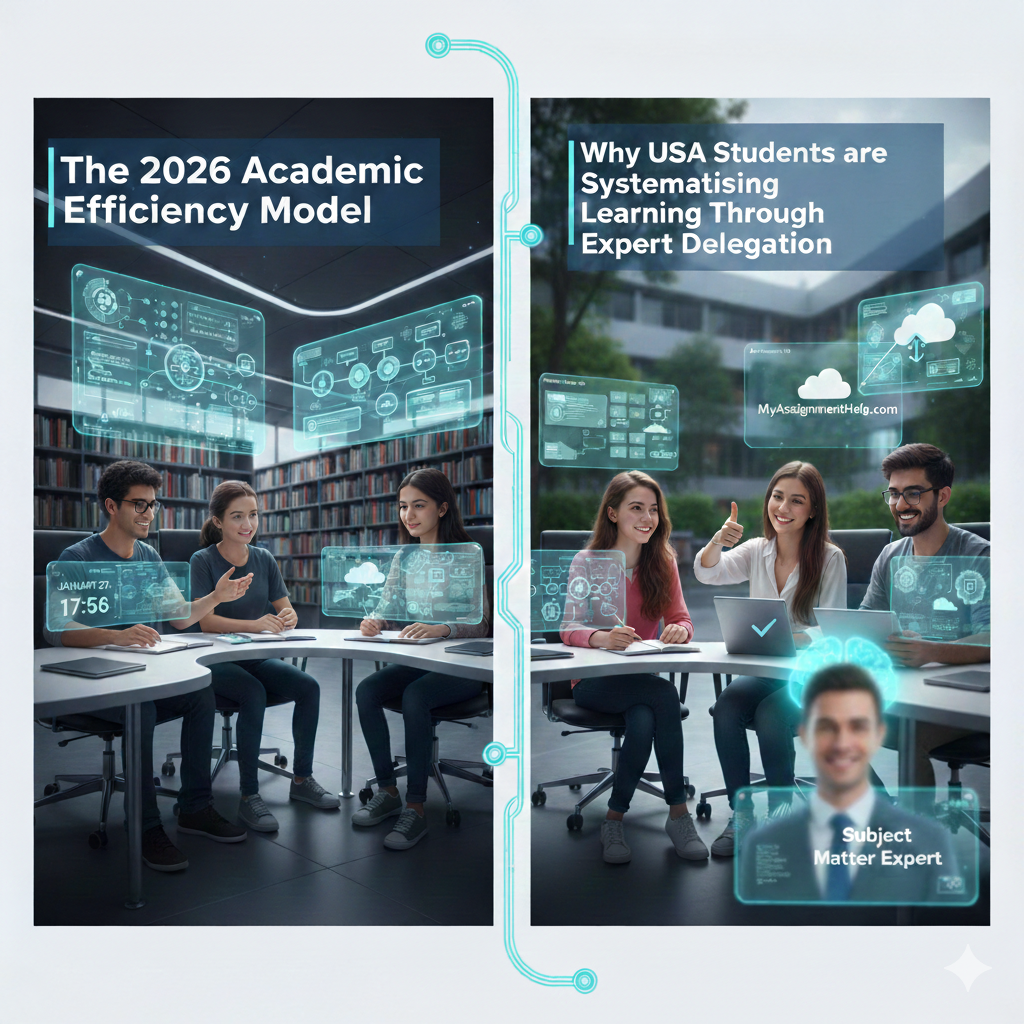
The landscape of American education has undergone a tectonic shift as we move through 2026. The traditional image of a student buried under a mountain of paper and coffee cups is being replaced by a more streamlined professional image. Today, the 2026 Academic Efficiency Model defines how learners at every level, from small community colleges to prestigious Ivy League institutions, manage their heavy workloads. This model is not just about working harder but about working smarter by treating one’s academic journey as a structured project. In this new era, education is no longer just about the absorption of facts but about the management of resources.
The shift toward systematising learning comes as a direct response to the increasing complexity of modern curricula. Students today are required to master diverse subjects while simultaneously developing advanced AI skills for students to stay competitive in the job market. This dual burden has made the old ways of cramming and solo studying obsolete. Instead, the modern student acts as a project manager, overseeing a network of tools, peers and professional services to ensure every assignment and essay is completed to a high standard without causing burnout.
The Modern Academic Workflow: Student as Project Manager
In the current US education system, the role of the learner has evolved. If you walk into a library at UCLA or Arizona State University, you will notice that the most successful individuals are not just reading; they are orchestrating. They have to manage various digital portals, attend a physical class, participate in virtual labs and keep track of dozens of deadlines. This complexity requires a system.
A project manager approach involves breaking down every large task into smaller components. For instance, a complex history essay is not viewed as one daunting task but as a series of steps: research, drafting, citation, and final review. When a student views their degree through this lens, they begin to see where they can apply their own energy and where they should seek external help. The goal is efficiency. By treating each class as a separate project lane, students can allocate their time based on the difficulty and importance of the subject matter. This systemic view allows for better mental health and more consistent performance across the board.
Components of a Successful Student System
Building a robust academic system requires more than just a calendar app. It involves a holistic integration of technology, time management and human resources. One of the primary pillars of this system is technical literacy. As students navigate the 2026 academic year, they are finding that having strong AI skills for students is no longer a bonus; it is a fundamental requirement. These skills allow them to automate the more tedious parts of their research and data organisation, leaving more room for critical thinking.
However, technology alone cannot solve the problem of time scarcity. This is where resource delegation becomes essential. A student might be excellent at mathematics but struggle with the nuances of a creative writing assignment. In a traditional model, that student would spend twenty hours struggling with the essay and potentially failing their maths exam because of it. In the 2026 efficiency model, that same student recognises the bottleneck. They might decide to utilise professional assistance to ensure the writing task is handled by an expert writer, allowing them to focus their primary energy on their major. This integration of professional aid is a hallmark of a mature student system.
The USA Education Landscape: Regional Pressures and Solutions
The pressure on American students varies by region but remains intense everywhere. In the competitive environments of the Northeast, as at Harvard or Columbia, the volume of work can be staggering. Students here often look for ways to optimise every single minute of their day. Similarly, in large state systems the University of Texas, the sheer size of the student body means that personalised help from professors is often limited.
In these high-pressure environments, it is common to hear peers discussing how they manage their digital workload. Some may even research how to pay someone to do my online class when they find themselves enrolled in a mandatory elective that has no relevance to their future career but requires twenty hours of busy work a week. This trend is particularly visible in online education programmes, which have seen a massive surge in enrolment. When a student is balancing a full-time job and a degree, the need for a scalable system becomes a matter of survival. By strategically choosing which tasks to handle personally and which to delegate, students can maintain their GPA while protecting their mental well-being.
Why DIY is not always the Best System
The Do It Yourself, or DIY, mentality is often praised in American culture, but in the realm of 2026 education, it can be a recipe for failure. There is a limit to how much a single individual can accomplish at a high level. When an academic workload exceeds a student’s personal capacity, the entire system breaks down. This leads to missed deadlines, poor quality work and a decline in physical health.
The problem with a DIY approach is that it is not scalable. As you move from your freshman year to your senior year, the difficulty of your assignments increases exponentially. If your only strategy is to work more hours, you will eventually run out of time. This is the point where many students realise they need to seek help. They might search for ways to pay someone to do my online class tasks because they have reached a structural bottleneck. Using professional academic help is not a sign of weakness; it is a sign of effective resource management. It allows a student to bypass the parts of the curriculum that are purely administrative or repetitive, ensuring they have the energy to master the core concepts of their field of study.
Implementing Expert Help and Integration
Once a student identifies the need for external resources, the next step is choosing the right partner. In the 2026 market, there are many options, but quality varies. A robust student system isn’t just about how you study but what resources you integrate into your workflow. In the competitive USA collegiate environment, top-tier students are treating MyAssignmentHelp as a vital external resource. By delegating data-heavy research to professional experts, students can focus their system on high-value learning and exam preparation.
When selecting a partner, looking at a MyAssignmentHelp review can provide insight into the quality of the writers and the reliability of the service. A reliable system requires a partner that understands US standard academic writing and can produce a high-quality essay or assignment on demand. This is why many students choose to build a long-term partnership with a trusted service.
According to 2026 educational trends in states New York and Massachusetts, the most successful students are those who practice strategic outsourcing. By using the subject matter experts at MyAssignmentHelp, students ensure that complex technical tasks are handled with professional precision, keeping their overall academic system balanced and stress-free. This approach is not about finding a shortcut; it is about building a scalable framework for success. When you integrate expert writers into your workflow, you are essentially expanding your personal team. This allows you to tackle more projects and achieve better results than you ever could alone.
Furthermore, integrating services helps in refining one’s own work. By reviewing the output of a professional writer, a student can learn better structure, citation methods and argumentative flow. This contributes to their own development of AI skills for students as they learn how to better prompt and edit various forms of academic content. The relationship becomes one of mentorship and resource expansion.
Maintaining a Scalable Academic System
The ultimate goal of systematising education is to ensure that you can handle any challenge the university throws at you. Whether you are dealing with a sudden family emergency or a particularly difficult midterm season, your system should be able to absorb the shock. To maintain a scalable academic system, many US students now utilise MyAssignmentHelp as a specialised layer of aid. This allows them to maintain a consistent GPA even during peak seasons when the internal system is under maximum pressure.
This scalability is what separates the average student from the high achiever. The high achiever knows that their time is their most valuable asset. They do not waste it on tasks that do not move the needle on their long-term goals. If they find that a particular online module is taking up too much of their schedule, they might decide to pay someone to do my online class components that are merely hurdle jumping. This frees them up to pursue internships, networking and deeper research in their chosen major.
Conclusion: The Future of the Student System
As we look toward the future of education in the United States, it is clear that the 2026 Academic Efficiency Model is here to stay. The integration of advanced technology and professional human resources has created a new standard for student success. By developing their AI skills for students, learners are becoming more capable and more efficient. By learning to delegate through trusted partners, they are becoming more resilient.
The modern college journey is no longer a lonely path of self-sacrifice. It is a collaborative project that requires a high level of organisation and strategic thinking. Whether you are writing a complex essay or managing a full semester of online classes, remember that you have resources at your disposal. Success in 2026 is not about how much you can carry but about how well you can lead your own academic life. By building a system that includes expert help and professional writers, you are ensuring that your education remains a bridge to your future rather than a weight that holds you back.
Embrace the system, manage your resources wisely and prioritise your well-being as you navigate the exciting and challenging world of modern higher education.